
**Dr. Neha Kayath, MD (Homeo.), BHMS, NDDY, *Poonam Vishnoi, BHMS (Homeo), Pursuing
Stress is a biological phenomenon which triggers the body to confront challenges. However, stress becomes a silent killer of hormonal health when it is a long term thing. Continuous stress is particularly vulnerable of the endocrine system which regulates growth, metabolism, reproduction and immunity by secreting hormones. To prevent the effects of stress on this system and consequent long term disorders in metabolic, reproductive and mental health, it is critical to understand the effects of stress on this system.
We are going to discuss the consequences of stress on the endocrine system in this article, including how it affects the HPA axis, the adrenal glands, the thyroid activity, the reproductive hormones, the blood sugar control, the release of growth hormone, and the functioning of immune systems, etc.
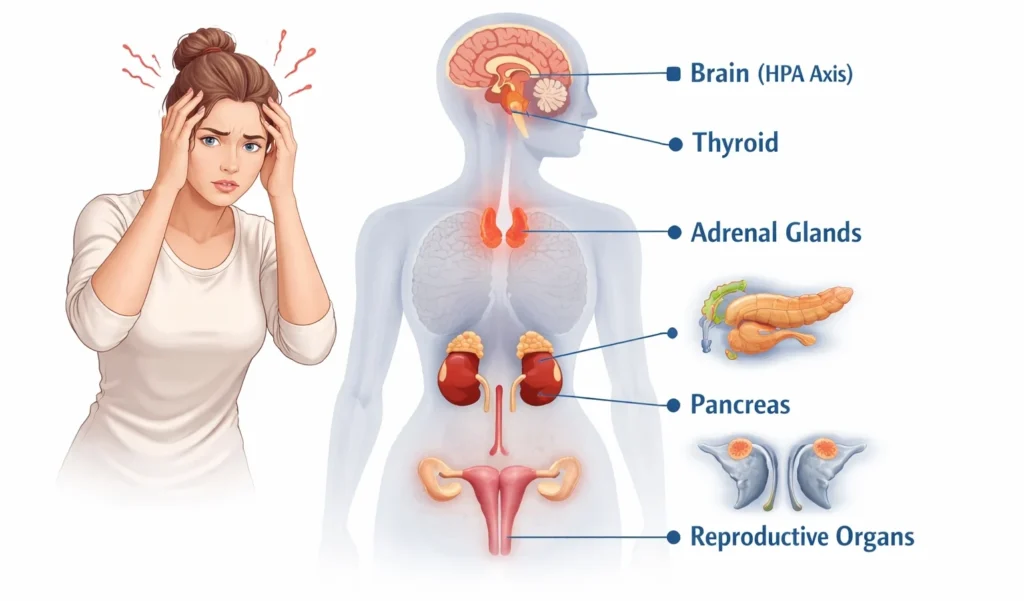
Understanding the Endocrine System and Stress
Endocrine system comprises of the glands such as the hypothalamus, the pituitary, the thyroid glands, adrenal glands, the pancreas and the reproductive organs. These glands release hormones directly into blood in order to regulate the key functions. When the body is faced with stress, a chain reaction is triggered in the brain and the adrenal glands that prepares the body to fight or flee.
Whereas such reaction can be very useful during the case of emergency, excessive hormonal depletion, disequilibrium, and irreversible damage are the result of the chronic work of endocrine glands.
The HPA Axis: The Body’s Stress Control Center
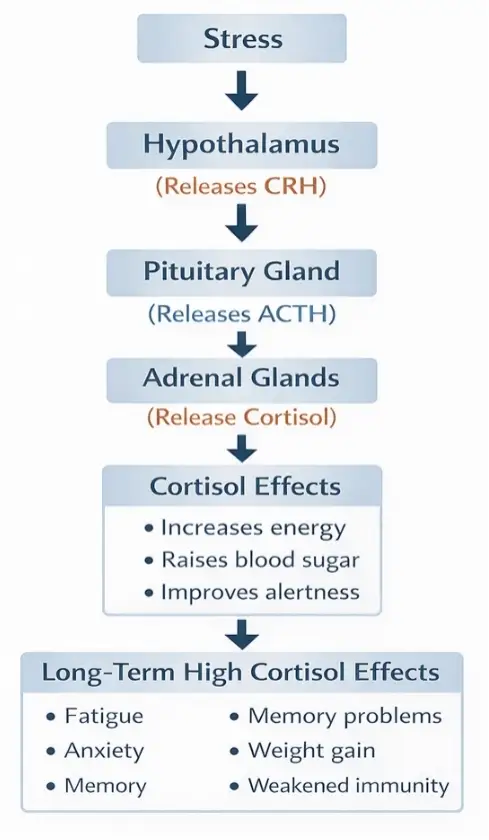
The most prevalent route of stress on the endocrine system is the Hypothalamic Pituitary Adrenal (HPA) axis. When stress is detected:
- The hypothalamus releases Corticotropin Releasing Hormone (CRH)
- The pituitary gland releases Adrenocorticotropic Hormone (ACTH)
- The adrenal glands release cortisol
Cortisol increases power, blood sugar and wakefulness. However, when cortisol levels are high in the long run, it causes fatigue, anxiety, memory issues, weight gain and immunosuppression.
Adrenal Glands and Chronic Stress
Cortisol and adrenaline are released when an individual is stressed. This is chronic stress, which leads to excessive stimulation of these glands thus producing more hormones.
This results in:
- High blood pressure
- Insomnia and poor sleep
- Constant tiredness
- Anxiety and heart palpitations
- Weak immunity
In the long-term, adrenal glands become tired, leading to the low level of energies, burnout and low stress tolerance.
Stress and Thyroid Hormone Imbalance
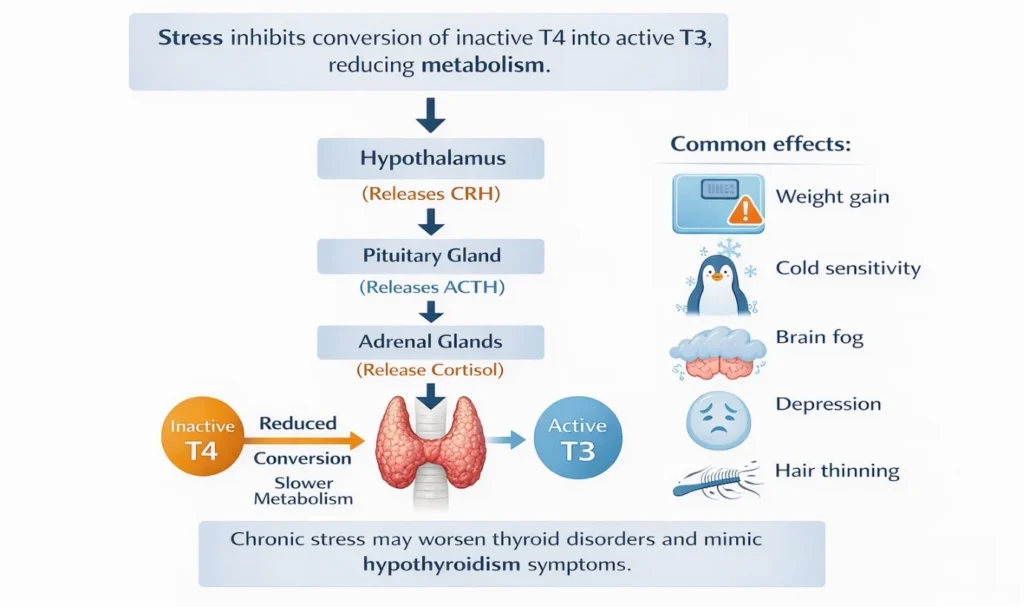
The effect of stress on thyroid gland is that it reduces the conversion of the inactive T4 hormone into active T3 hormone. This lowers the body metabolism.
Common effects include:
- Weight gain
- Cold sensitivity
- Brain fog
- Depression
- Hair thinning
Chronic stress can impact and worsen already existing thyroid diseases and mimic the symptoms of hypothyroidism.
Impact of Stress on Reproductive Hormones
Stress also inhibits reproductive hormones by diverting energy instead of reproduction to survival.
In women, this can lead to:
- Irregular menstrual cycles
- Infertility
- PMS
- Hormonal imbalance
In men, chronic stress causes:
- Reduced testosterone
- Low sperm production
- Reduced libido
Cortisol inhibits the ovulation and sperm production hormones.
Stress, Insulin, and Blood Sugar Control
The body also releases more glucose in the blood stream in case of stress to give the body rapid energy. Stress leads to the level of blood sugar also being high and this forces the pancreas to produce more insulin.
Over time, this leads to:
- Insulin resistance
- Abdominal fat storage
- Type 2 diabetes risk
- Energy crashes
Growth Hormone Suppression Due to Stress
Stress is long lasting and it reduces the secretion of growth hormone which is needed in the repair of tissues, muscle rebuilding and healing.
Low growth hormone causes:
- Slow recovery
- Weak muscles
- Reduced immunity
- Poor growth in children
That is why, individuals who are constantly stressed recover slowly, and are physically burnt out.
Stress, Hormones, and Immune System Connection
The hyper secretion of cortisol concentration on the stressful conditions during a prolonged period significantly affects the functioning of immune system by reducing the activity of white blood cells that attack infections. At the same time, long-term exposure to cortisol amplifies the inflammatory condition of the body and this is largely implicated in the emergence of autoimmune diseases, cardiovascular diseases and chronic fatigue syndromes. When the stress continues the communication between the endocrine system and the immune system is impaired and the body fails to react to a disease or injury. This hormonal imbalance retards the healing process, affects individuals to infection and reduces the ability to manage the inflammations hence exposing individuals to both short and long-term health issues.
Why Managing Stress Is Critical for Hormonal Health
Chronic stress is one of the most powerful disruptors of the endocrine system because it puts the body in a constant state of survival It leads to an unfavorable effect on the metabolic state, reproductive health, immune system, and emotional stability.
High levels of cortisol interfere with insulin, thyroid hormone, growth hormone and reproductive hormone leading to fatigue, weight gain and reproductive problems and low immunity. With proper sleep, exercise, calm practices such as meditation and deep breathing, proper dieting and emotional support, hormonal equilibrium within the body is regained and total physiological robustness is boosted, which goes a long way in ensuring the reduced likelihood of chronic endocrine disorders.
How to Manage Stress to Protect Your Endocrine System
- Get enough sleep – Proper sleep helps regulate cortisol, growth hormone, and insulin levels.
- Exercise regularly – Physical activity lowers stress hormones and improves metabolic and hormonal balance.
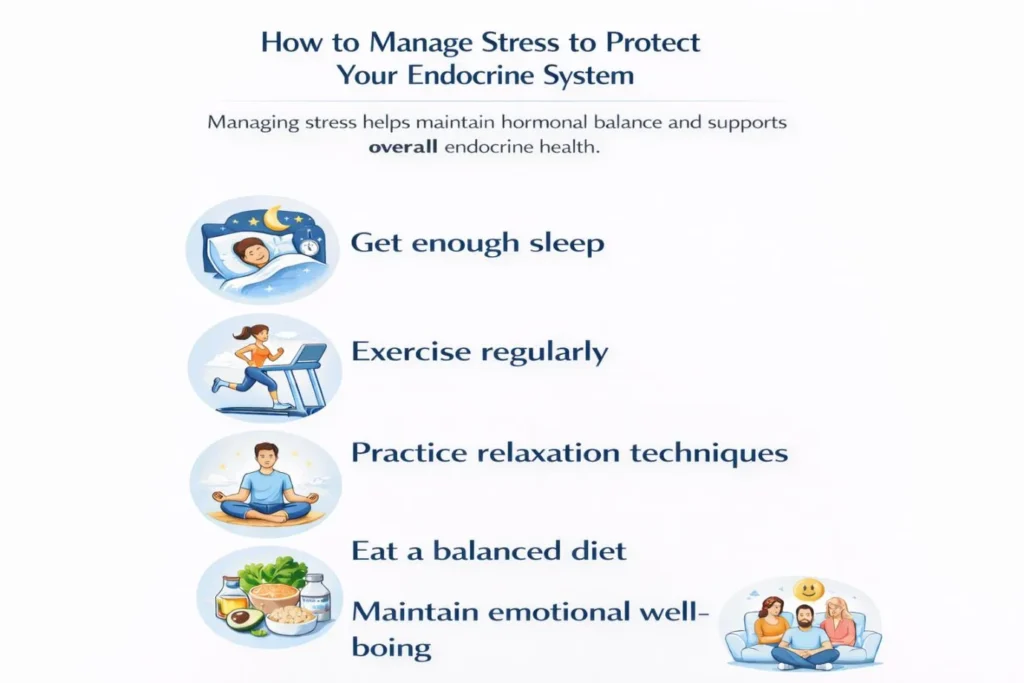
- Practice relaxation techniques – Deep breathing, meditation, and yoga calm the nervous system and reduce cortisol.
- Eat a balanced diet – Nutritious foods support adrenal, thyroid, and pancreatic function.
- Maintain emotional well-being – Social support, hobbies, and counseling reduce psychological stress and protect hormonal health.
Conclusion
Although stress is an inseparable part of life, chronic stress cannot be disregarded because of a great impact on the hormonal balance and overall well-being. The continual stress activations overstretch the endocrine system which gradually leads to metabolic and immunological disorder, reproductive and psychological disorders.
Realizing how stress influences hormonal activity and having good ways of coping with it, a person can save his or her endocrine system, enhance his or her energy levels and stimulate physical and psyche in all the life. The endocrine system is eventually in a position to perform its best as a very strong foundation towards a healthier and balanced life through a relaxed and controlled nervous system.

Nice
“Well-researched and awareness-oriented content. Great job!”
Very good content and informative too. 👍
Your hard work truly paid off. Congratulations!